
A small living room in a tiny house does not have room for guessing games. Every chair, every table, every rug either earns its spot or steals space you needed for something else.
Most small living room ideas online show wide open lofts with ceilings twenty feet high, which is not helpful when your actual room is nine feet by eleven. The furniture in those photos would swallow half your floor.
What actually works in a tight footprint is different. It means picking pieces that do two jobs, using height instead of floor space, and being honest about what you can fit without the room feeling like storage.
These fifteen ideas come from real tiny house layouts, not showroom staging. Some take an afternoon. Others take one smart purchase. All of them leave you with a room that still feels like a place to sit down, not a hallway with a couch in it.
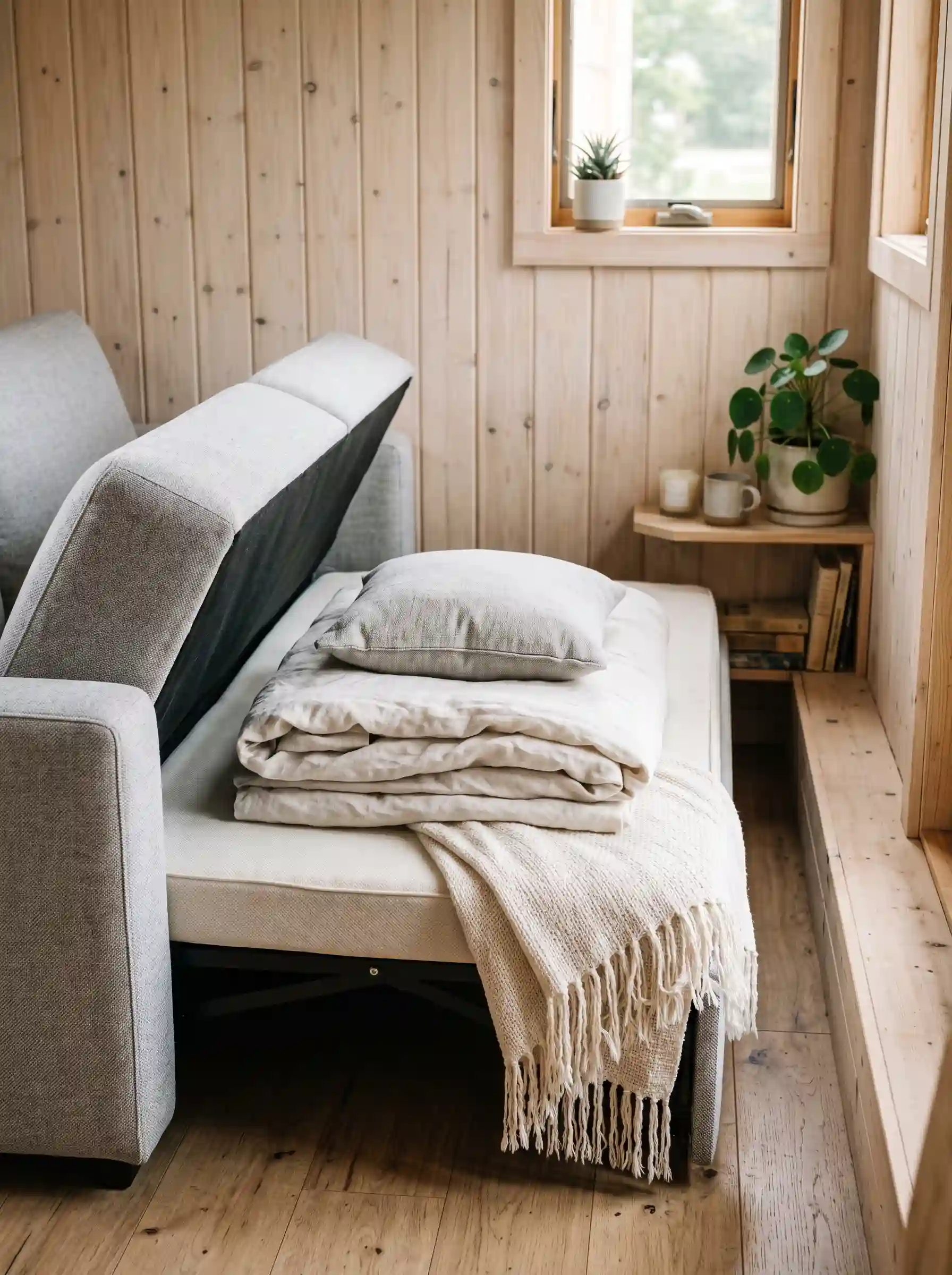
1. Pick a Sofa That Pulls Double Duty as a Guest Bed
Most sofa shopping starts with color and comfort, and space usually loses that fight. In a small living room, the sofa has to solve two problems at once: everyday seating and a spot for guests to actually sleep.
A few options do this well.
- A pull out sleeper with a slim foam mattress, not the old spring bar kind
- A daybed with a trundle that tucks underneath during the day
- A futon frame that folds flat without eating extra depth against the wall
Measure the folded and unfolded depth before you buy. A sofa that looks compact in the store can block a walkway once it opens.
2. Float Your Furniture 6 Inches Off the Wall
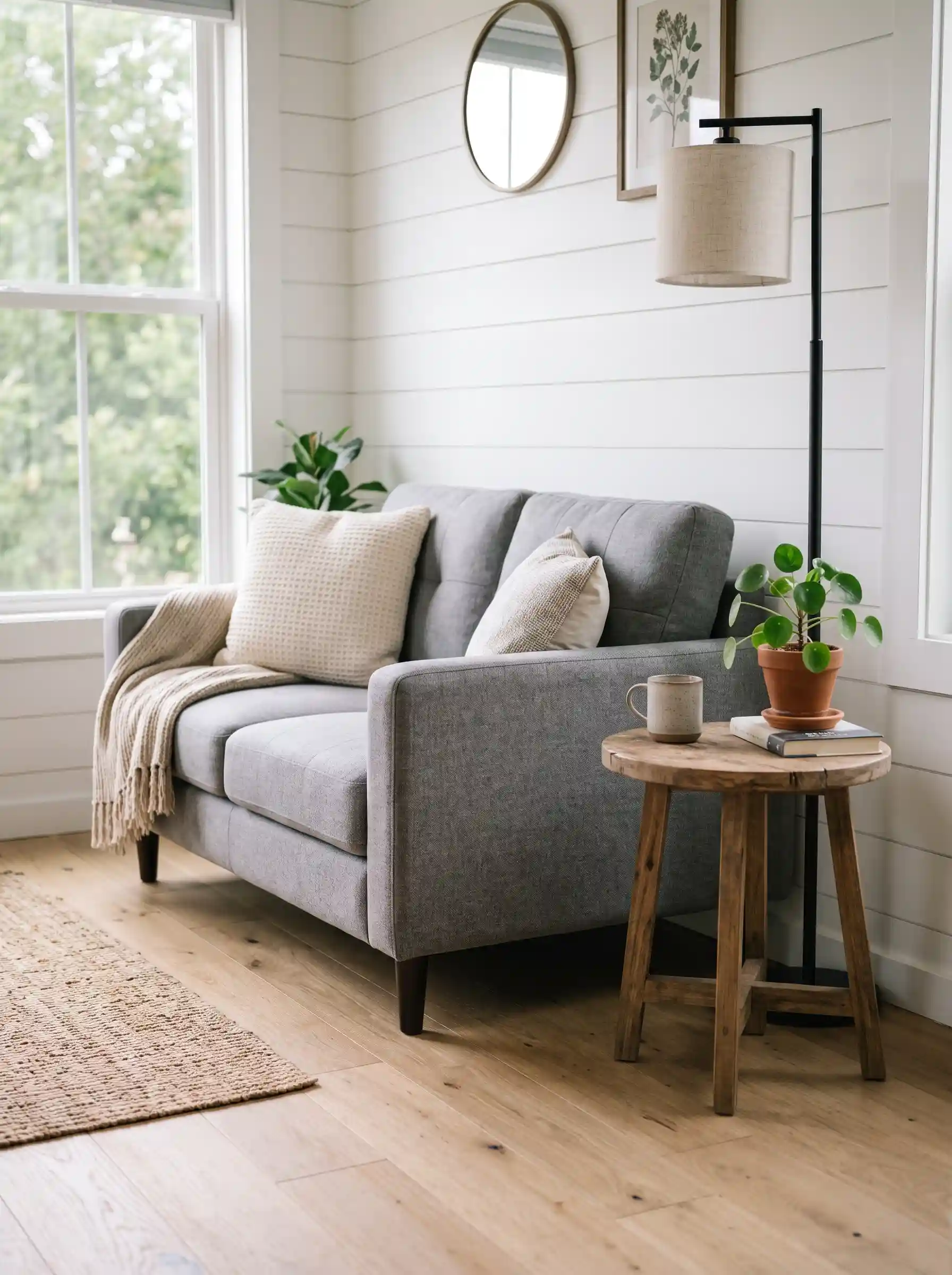
Push every piece flat against the wall and a small living room starts to feel like a hallway.
Try the six inch pull test:
- Move the sofa off the wall by a hand’s width
- Do the same with the media console
- Leave only pieces with hidden cords touching the wall
The gap tricks the eye into reading real depth instead of one flat block of furniture. It costs nothing and takes about ten minutes.
💡 Quick Tip
If a piece needs to stay against the wall for outlet access, cut a small notch in the baseboard instead of pushing the whole thing back.
3. Trade the Coffee Table for Vintage Suitcases With Real Storage
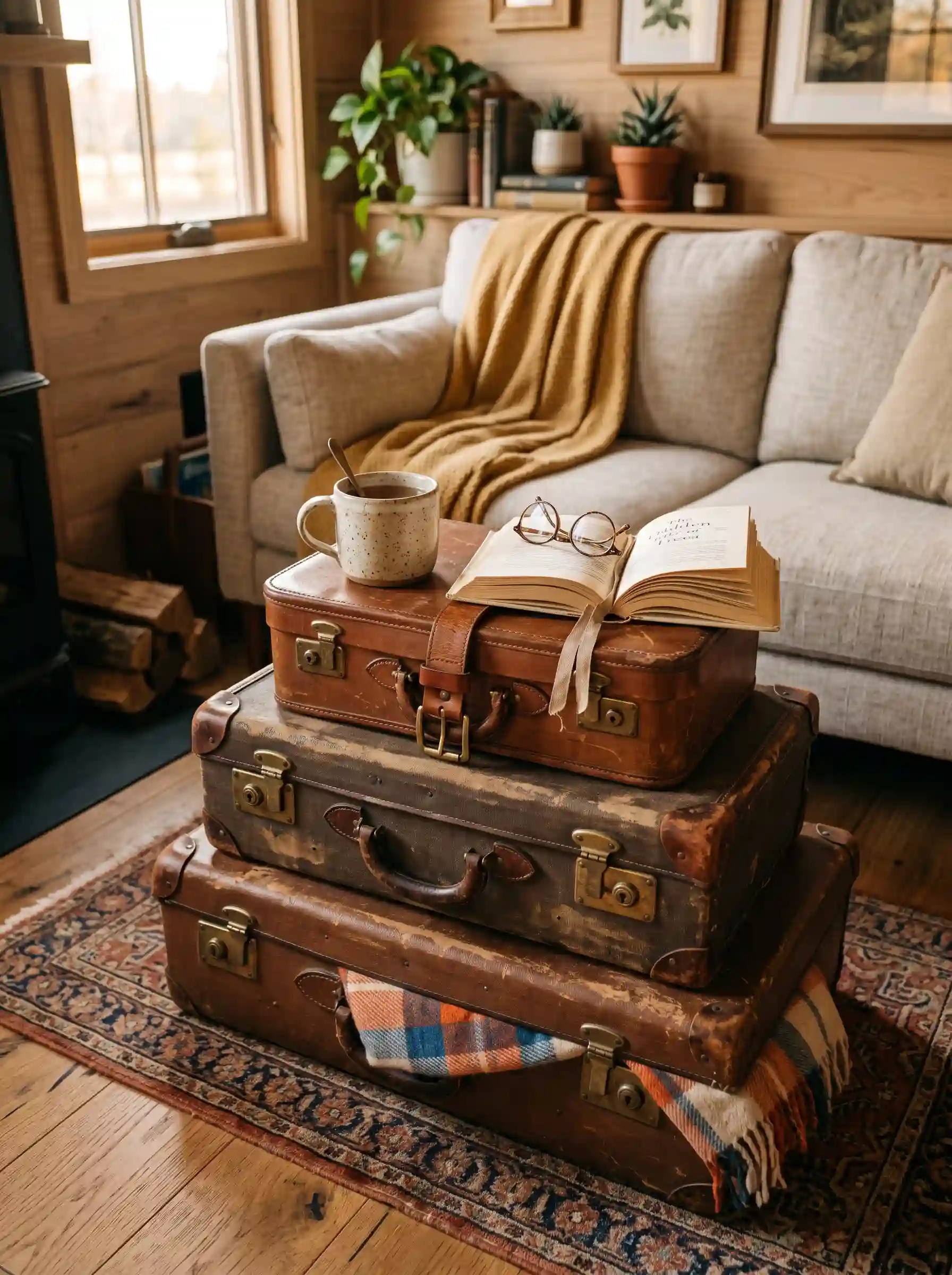
A stack of two or three vintage suitcases sits low enough to clear a small sofa’s sightline, with brass latches and worn leather corners that most flat pack coffee tables can’t fake.
Inside, the bottom case holds blankets, the middle one holds board games, and the top stays empty enough to set down a coffee mug. Thrift stores usually price hard sided luggage under twenty dollars a piece, cheaper than most compact coffee tables.
Stack them largest on the bottom, and strap the top one shut with a leather belt for a finished look instead of a loose lid.
4. Hang Your Curtains From the Ceiling, Not the Window Frame
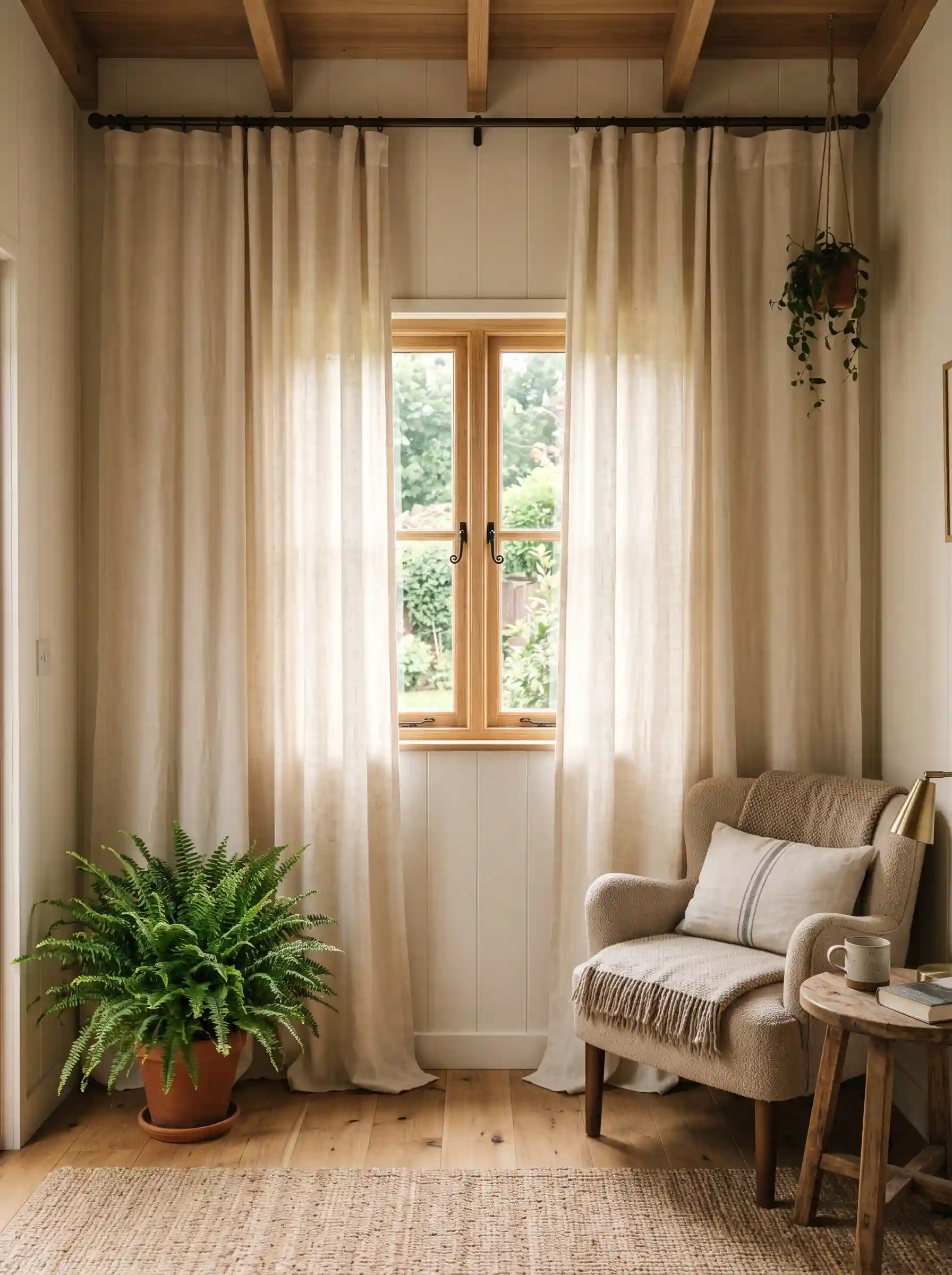
Most people hang curtain rods right above the window frame, which chops the wall in half visually and makes the ceiling feel lower than it is.
Move the rod up to just below the ceiling instead, even if that means eight or ten extra inches of fabric. The window looks taller, the wall looks taller, and the whole room borrows height it does not actually have.
Buy curtains one size longer than you think you need. Pooling slightly at the floor reads intentional, dragging at the sill just reads too small.
Measure from the ceiling down to the floor, not from the window frame.
Mount the brackets as close to the ceiling as your trim allows.
Hang curtains long enough to just graze the floor.
5. Let One Bold Rug Define the Room Without Adding a Single Wall
A rug can split a single room into a living area and a walking path without a single stud going into the wall.
Pick one rug big enough that the front two legs of the sofa sit on it, not just a small mat floating under the coffee table. That size difference is what separates a room that looks planned from one that looks like the rug got lost.
Bold pattern or solid color both work. What matters is the rug stopping a few inches before it meets the kitchen or entry flooring, so the line stays clean.
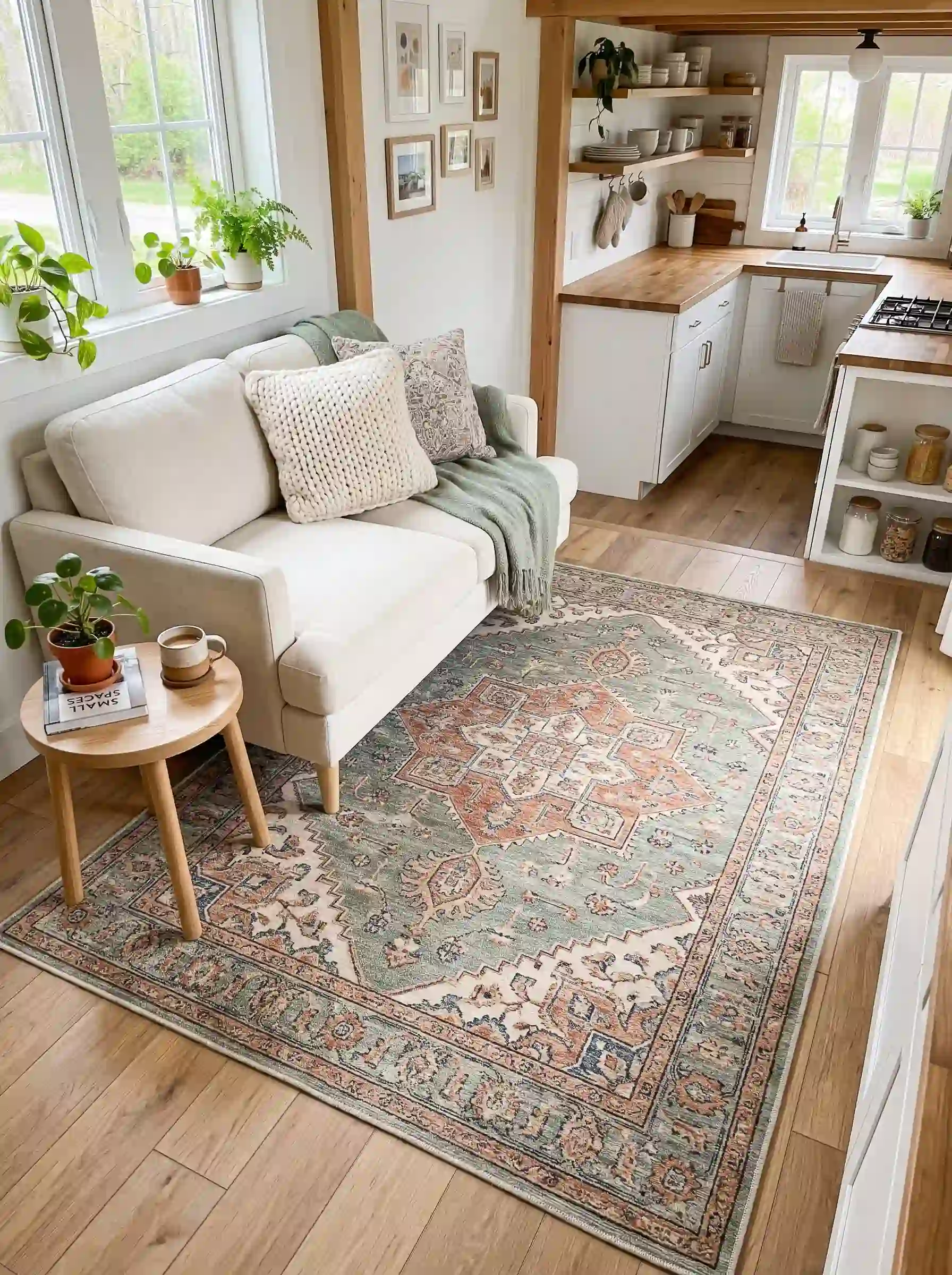
One open room with furniture floating in the middle and no clear seating area.
A defined living space where the rug edge tells you exactly where to sit.