
Most tiny house lofts are not built for adults who stand up. You climb up, crawl to the bed, and bump your head at least once. Then you lie there wondering where your phone, your clothes, and your elbow are all supposed to go.
That is the honest part nobody puts in the listing photos. A loft is a small box under a roof. The usual advice to “just make it cozy” does nothing about a beam at forehead height or a bed that eats the whole floor.
The good news is that a few small, practical moves fix most of it. These tiny house loft bedroom ideas focus on headroom, safety, storage, and heat, the four things that decide whether you sleep well up there. Some take an afternoon. Some cost almost nothing. None need fancy skills.
Start with the one that solves your biggest annoyance, then work down the list.
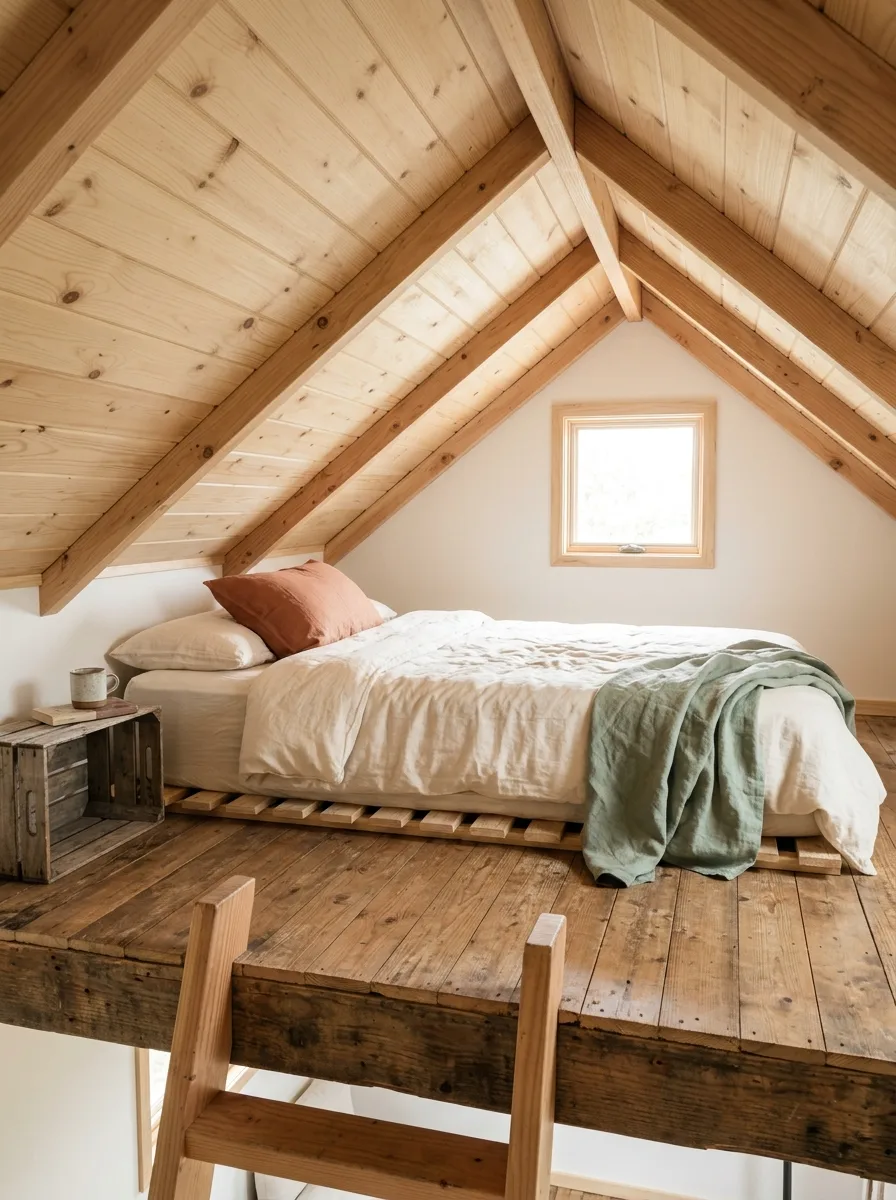
1. Set the Mattress Right on the Loft Floor to Win Back Headroom
[Image placeholder. Alt text: mattress resting directly on a tiny house loft floor with open space above it]
A bed frame and box spring quietly eat a lot of your headroom. Dropping the mattress onto the loft floor gives that height back, and it costs almost nothing.
A few things keep it comfortable:
- Choose a firm mattress, or add a thin foam topper for support.
- Lay slatted boards or a breathable mat underneath so air can move.
- Lift and air out the mattress now and then to keep damp away.
A low bed also makes the ceiling feel farther away, because your eyes sit lower.
Quick tip: Sit up on the bare mattress before you buy anything. If your head clears the ceiling by a hand’s width, you are set.
2. Pad the Low Beam Before It Finds Your Forehead Again
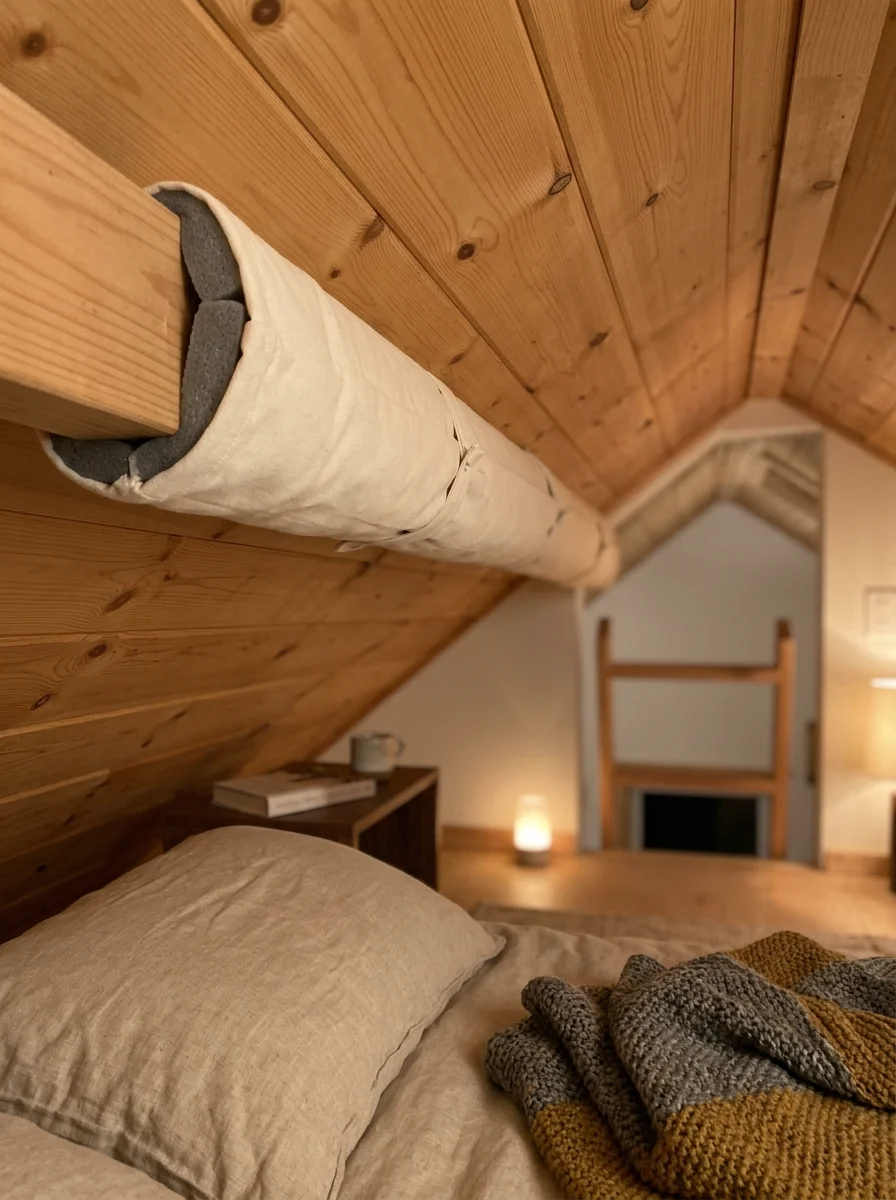
[Image placeholder. Alt text: foam-wrapped wooden beam above a cozy low ceiling loft bedroom]
Head bumps tend to happen at night, half asleep, when you forget exactly where the beam is.
Three cheap fixes:
- Slip foam pipe insulation over the beam. It costs very little and takes minutes.
- Wrap the foam in a scrap of fabric that matches your bedding.
- Paint the beam a bright, contrasting color so your eyes catch it in dim light.
Soft and visible beats hard and hidden every time.
Quick tip: Put a small nightlight near the ladder opening so the beam is easy to spot.
⚠️ Watch Out
Padding softens a bump, but it does not give you more headroom. If you hit the beam while sitting up in bed, move your pillow to the tallest side of the loft instead.
3. Turn the Sloped Edge Into Low Drawers and Cubbies
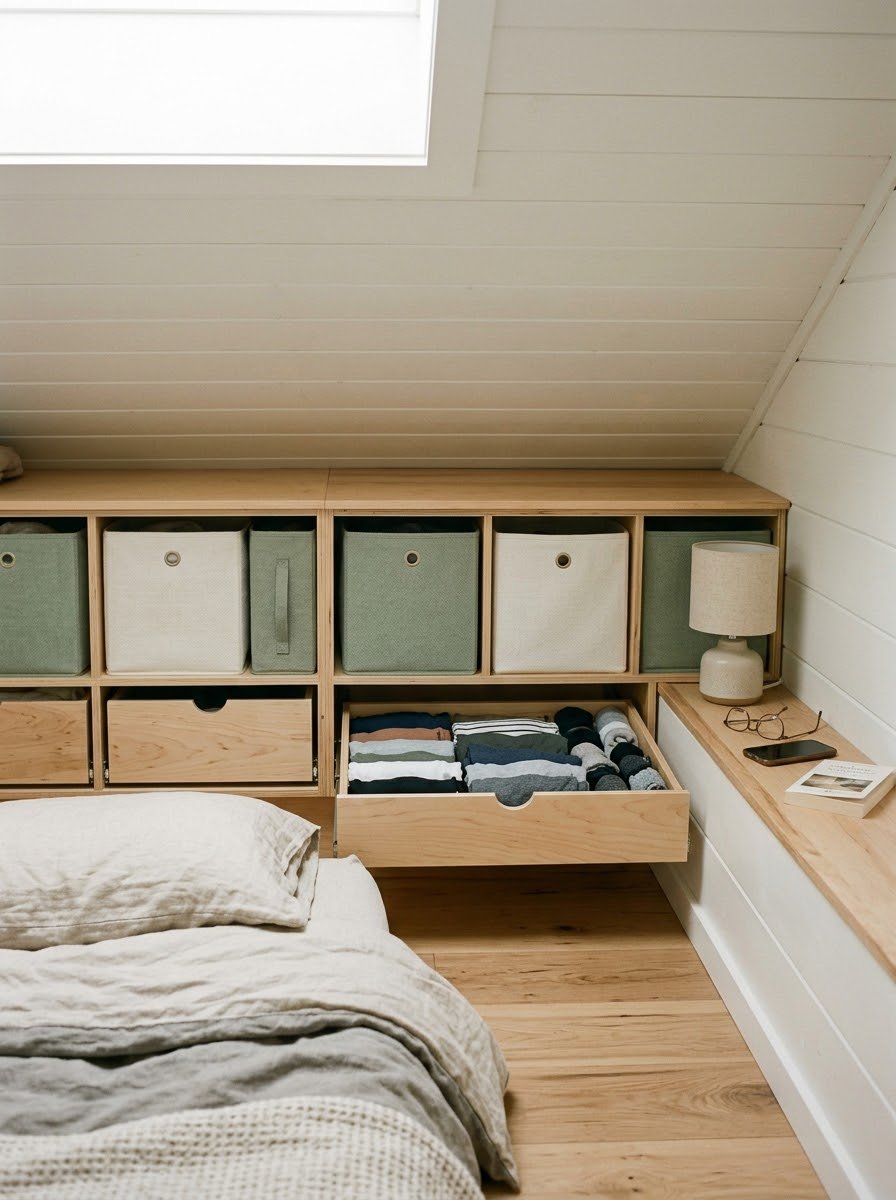
[Image placeholder. Alt text: low drawers and fabric cubbies built into a sloped tiny house loft wall]
Look at the spot where the roof slopes down to meet the floor. Nobody can stand there, so it usually ends up holding a pile of laundry.
That strip is the best storage spot in the loft, because you never need headroom to reach into a drawer.
Slide shallow drawers on rails along the low edge. Use open cubbies with fabric cubes for socks and tees. Add a narrow ledge at bed height for your phone, glasses, and a small lamp.
Quick tip: Measure the lowest height first, then buy bins to fit. Bins that are one inch too tall stay in the box.
Clothes pile on the mattress. A bag sits where your feet go. Your charger cable is lost somewhere in the covers.
Low drawers hold the clothes. The bed area stays clear. A ledge keeps the phone and glasses within reach.
4. Pick a Ladder or Stair Style Based on How You Actually Climb
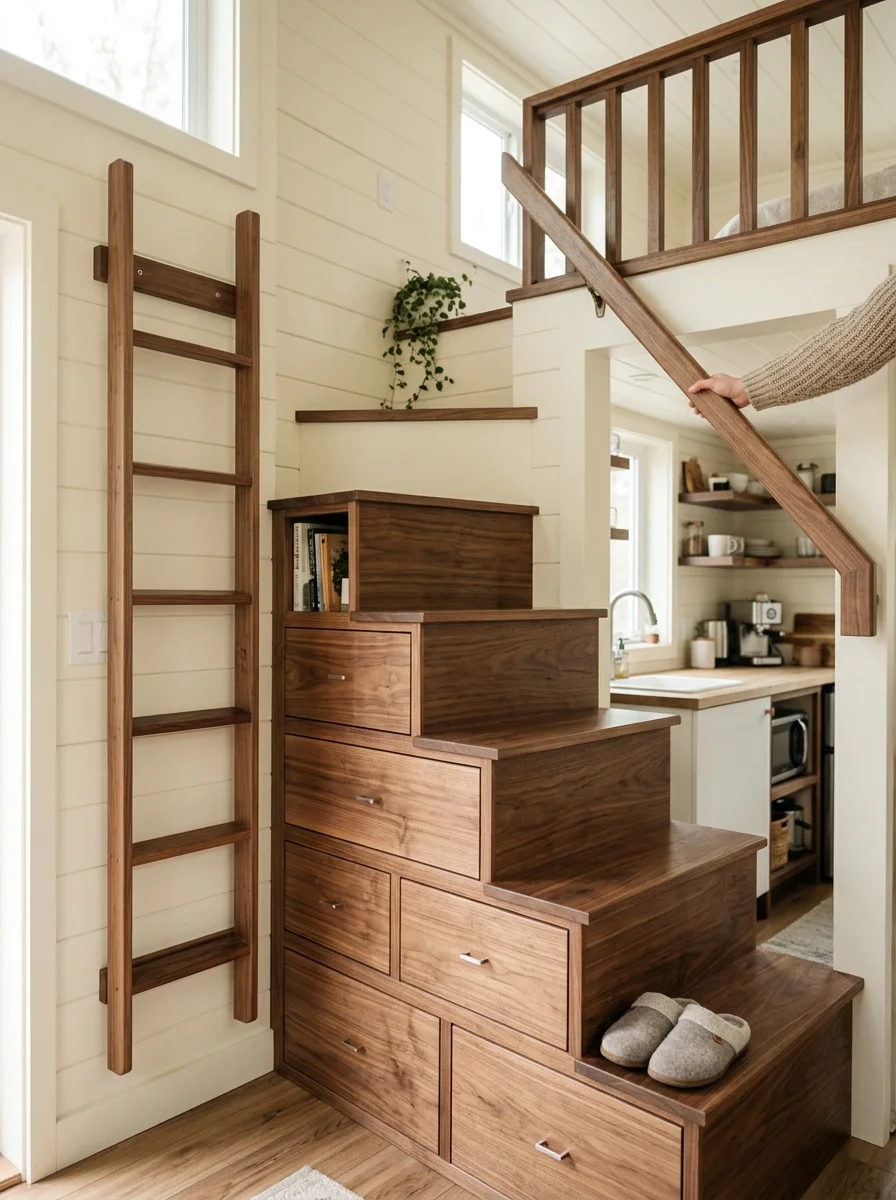
[Image placeholder. Alt text: tiny house loft access with a wall-mounted ladder next to storage steps]
A straight ladder uses the least floor space. Storage steps use more, but they hold drawers and feel steadier underfoot.
Think about your daily routine. Do you carry a laptop up? Do you get up at night? Do you have a pet that follows you? Those answers matter more than the look.
Whichever you choose, add a rail or wall grip at the top opening, plus a guardrail on any open edge of the loft. Check your local rules and your builder’s guidance, since requirements vary.
Quick tip: Test the climb at night, carrying a glass of water. If it feels awkward, change it now.
| Straight ladder | Stair style steps |
|---|---|
| Floor space: takes very little. | Floor space: takes more room. |
| Hands full: harder to manage. | Hands full: much easier. |
| Storage: none built in. | Storage: drawers inside the steps. |
| Build effort: low, easy DIY. | Build effort: more work or cost. |
5. Move the Hot Air Out With a Window, a Fan, and Light Bedding
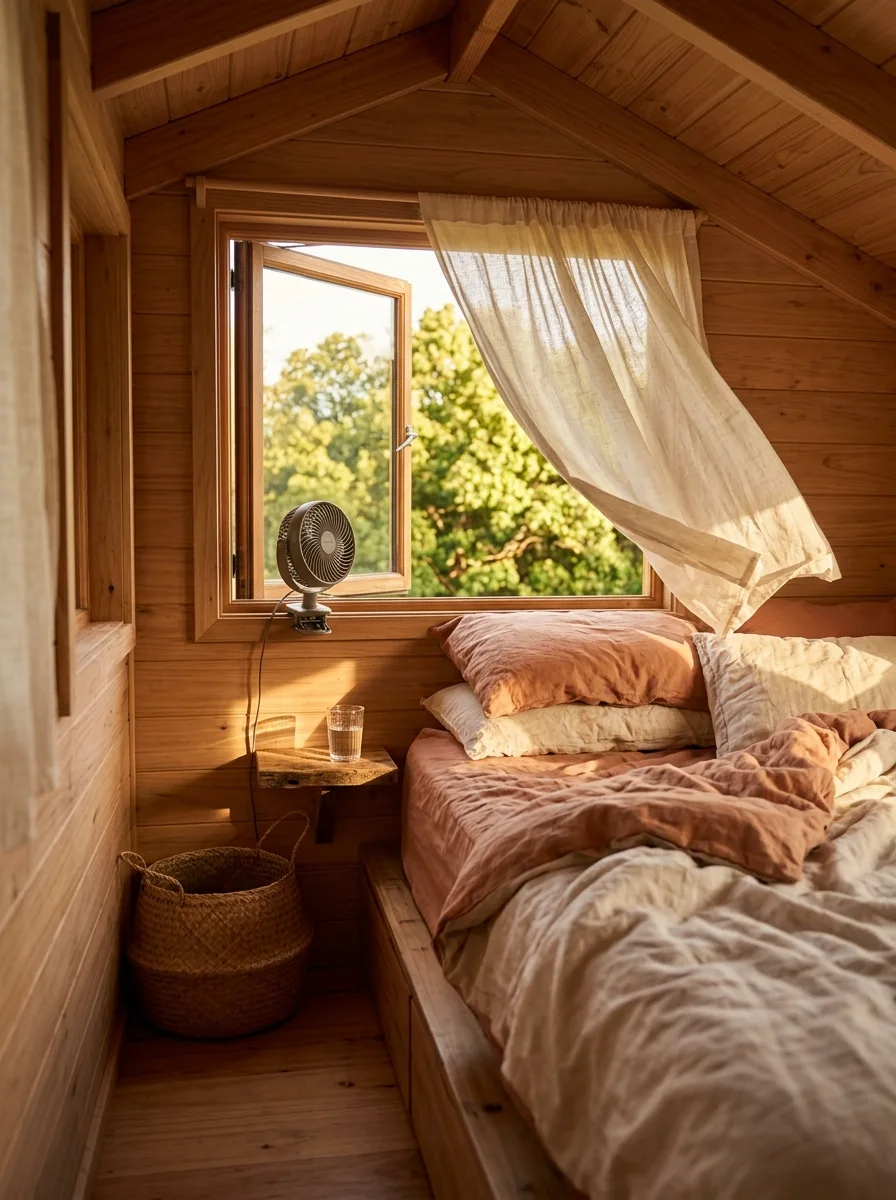
[Image placeholder. Alt text: small loft window open above a bed with a clip fan and light linen bedding]
Heat rises, so the loft will always run warmer than the rest of the house. That part is true.
What many people miss is that you can push the heat out instead of just putting up with it.
- Open a window or vent at loft height so hot air has an exit.
- Aim a small fan toward that opening, not at your face.
- Swap the heavy quilt for breathable layers like cotton or linen.
Cool air from below then has a path to follow upward.
Conclusion
A good loft does not need more space. It needs the right moves in the right spots: a low mattress, a padded beam, storage along the slope, a safe climb, and air that actually moves. Start with the easiest one tonight, which is probably the mattress, and see how you feel in the morning. These tiny house loft bedroom ideas are small on purpose, so you can add them one at a time as your budget allows. Each one makes the space calmer, safer, and easier to live in.